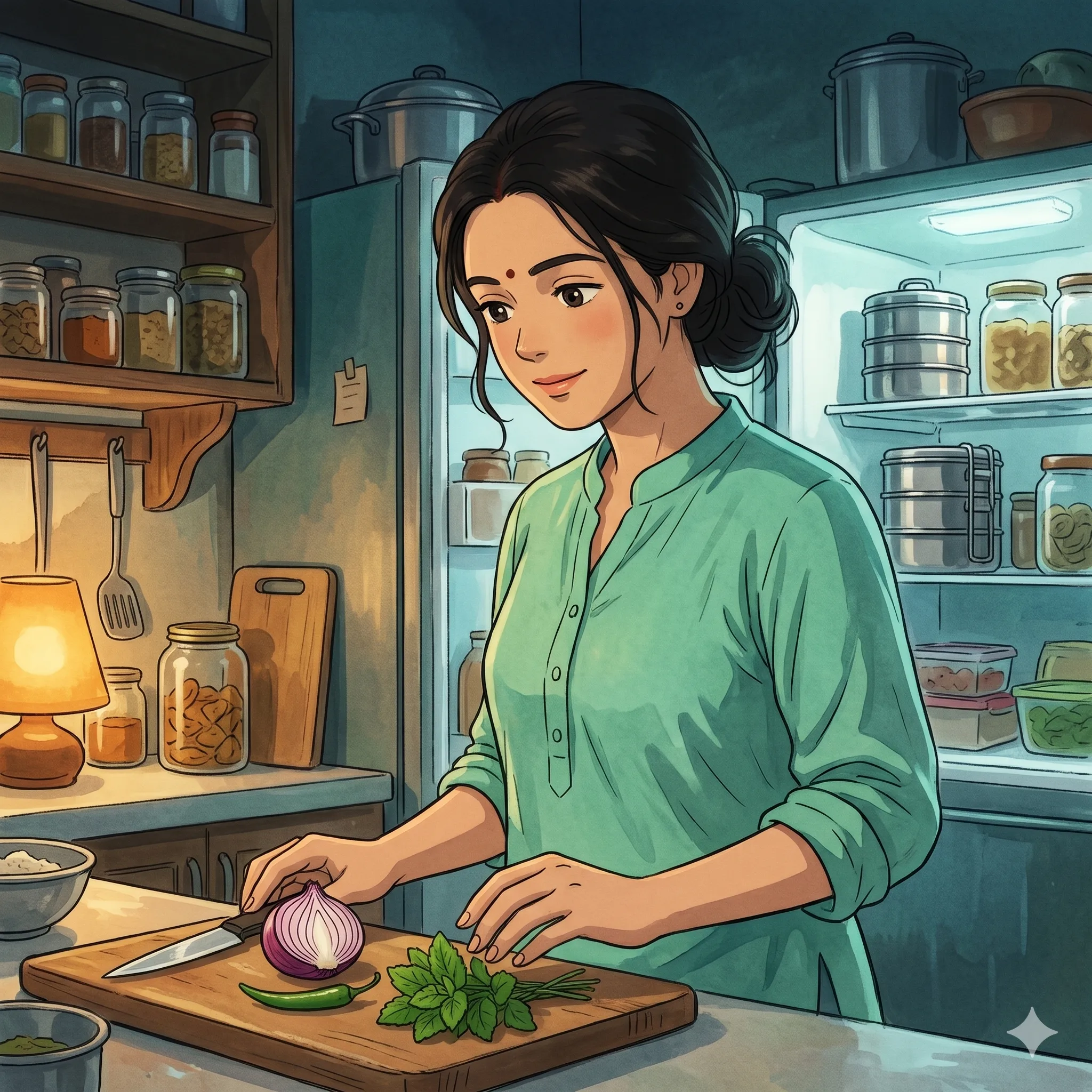

The dabba that started it
Every Indian kitchen keeps a shelf of half-things. Half a cabbage. Four curry leaves in a twist of newspaper. The last of the toor dal. Yesterday's rice in a steel dabba, waiting to be given a second life.
Recipe sites never spoke to that shelf. They handed over a shopping list and expected obedience - twelve ingredients, three of which nobody keeps, one of which the shop down the road has never stocked. Sunita cooked for a family every day and slowly realised the internet was answering the wrong question.
“I don't want to know what to buy. I want to know what to cook - tonight, with this.”
Sunita
Her grandmother's method, on a screen
Her grandmother never used a recipe. She opened the vegetable basket, looked at what was in season, and worked backwards. Potato and a fistful of methi became one dish; potato and yesterday's rice became another. It was ingredient-first cooking, decades before anyone gave it a name.
Planmeal is that method, rebuilt as software. You add what you actually have to a basket, and the site finds the dishes that use it. No shopping list. No eleven-paragraph story before the ingredients. Just the cooking.
Why the details matter
Along the way it became an obsession with precision: what an ingredient is called in nine languages, when it is genuinely in season, what it does to a tadka, and which dish it belongs to. That obsession is why the ingredient pages read like a cookbook rather than a catalogue.
And it's why every recipe here can be corrected by the people who cook it. If your grandmother did it differently, we want to hear it - that's a feature, not a complaint form.
Cook what you have
The basket comes first. Recipes follow the ingredients, never the other way round.
Written like a cookbook
Real quantities, real timings, and the small notes a good cook would tell you.
Yours to keep
Save, cook-log and print your own cookbook - the way a kitchen diary should work.
“Ghar ka khana. Start with what's already there.”
With warmth, the Planmeal kitchen